
In 2017, the B.C. Farm Industry Review Board (BCFIRB) reviewed how and to what extent Asian specialty hatching egg production is regulated.
What was decided
On July 17, 2018, BCFIRB issued its final decision on the B.C. Broiler Hatching Egg Commission’s (BCBHEC) recommendation to exempt Asian specialty producers from regulation.
BCFIRB’s decision denied BCBHEC’s recommendation and directed BCBHEC to introduce transferrable production permits to Asian specialty producers with several other minimum requirements and conditions.
BCFIRB also directed BCBHEC to provide an interim report to BCFIRB on the decision directions by no later than December 31, 2018.
Why BCFIRB conducted this review
BCFIRB launched the supervisory review in response to the following events.
Appeals raised concerns about fairness and unclear rules
In 2016, several specialty producers appealed BCBHEC’s decision to implement a “Regularization Program.” This program limited quota for Silkie and Taiwanese chicken breeders. Appellants argued it was arbitrary, unfair and harmful to their small businesses.
BCFIRB agreed with the producers. In a decision issued on March 29, 2016, BCFIRB found that BCBHEC had not used a transparent or inclusive process.
BCFIRB ordered BCBHEC to:
- Rescind the specialty producer regulations
- Enforce only basic safeguards (biosecurity, food safety, and premises ID)
- Consult producers and create a fair, transparent process to decide what level of regulation was appropriate for the sector
While BCBHEC worked on the new process, a second round of appeals was filed. BCFIRB dismissed them on August 16, 2016, because the process was still underway.
BCBHEC proposed exempting Asian producers from regulation
On August 19, 2016, BCBHEC asked BCFIRB to approve a new proposal. The proposal would exclude Asian specialty producers from broader regulation, keeping only basic requirements like biosecurity, food safety and premises identification.
Supervisory review launched and appeals deferred
On September 15, 2016, BCFIRB informed BCBHEC that it had formed a supervisory panel to evaluate the exemption request. This marked the start of a structured, multi-phase review process to:
- Assess the broader implications of exempting specialty producers
- Ensure compliance with applicable legislation and marketing policy
- Provide a fair, inclusive framework for evaluating how regulation should apply to niche producers within the broader supply-managed system
Around the same time, several producers filed appeals challenging BCBHEC’s proposal. Rather than proceed with multiple overlapping appeals, BCFIRB deferred all related appeals until the supervisory review was complete.
How regulation works in the broiler hatching egg sector
Who BCBHEC regulates
In B.C., BCBHEC regulates the production and marketing of broiler hatching eggs under the Natural Products Marketing (BC) Act (NPMA).
BCBHEC oversees registered producers, including:
- Broiler breeder producers who raise breeding flocks and produce fertile hatching eggs
- Pullet growers who raise young hens before they start laying
At the national level, broiler hatching eggs are part of Canada’s supply management system, which balances production with demand to maintain price stability.
Hatcheries’ role in the supply chain
BCBHEC does not directly regulate hatcheries, which play an important role in the supply chain by incubating eggs and hatching chicks. Instead, BCBHEC manages hatchery supply indirectly by controlling how many hatching eggs producers can sell to chicken producers. BCBHEC is also responsible for setting the price of chicks, which is the price hatcheries receive for chicks from chicken producers.
BCBHEC’s regulatory responsibilities
BCBHEC is responsible for:
- Licensing producers
- Setting production levels through quota
- Coordinating with hatcheries on egg supply
- Enforcing standards for animal health and biosecurity
What makes Asian specialty producers different
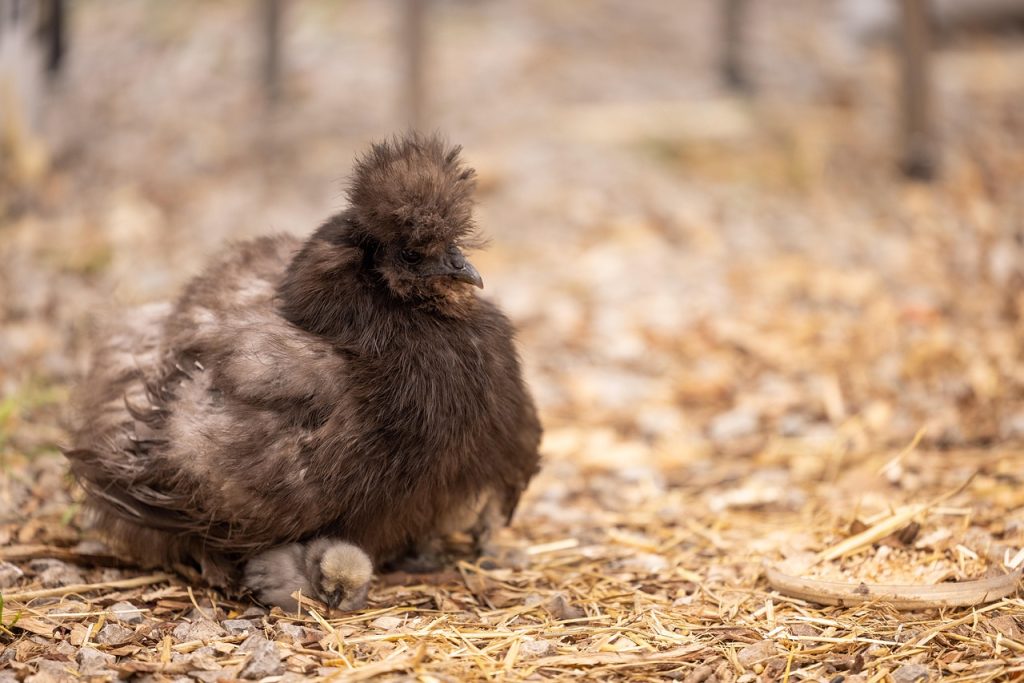
Asian specialty producers raise non-standard breeds like Silkie or Taiwanese chickens for niche markets. They operate at a smaller scale and serve different buyers. These differences raised questions about whether the same regulatory framework should apply to them as it does to mainstream chicken producers.
Timeline of the review process
This section provides a detailed record of the supervisory review process from 2016 to 2019. It includes meeting summaries, consultation phases, decision points and stakeholder submissions.
Review process begins (September to December 2016)
BCFIRB began a supervisory review to examine the issue in full. A supervisory panel was formed to oversee the process. Before ruling on BCBHEC’s request, BCBHEC needed to complete a BCFIRB-approved process to address outstanding procedural and informational gaps.

BCFIRB forms supervisory panel
September 15, 2016 – BCFIRB formed a supervisory panel to evaluate BCBHEC’s request to exempt Asian producers
Appeals deferred pending review
September 16, 2016 – Appeals related to BCBHEC’s proposal were deferred pending the review
Appeals deferred until panel review is complete (PDF, 109KB)
Parties agree on need for formal review process
October 19, 2016 – BCFIRB met with BCBHEC, and all parties agreed that BCBHEC would need to develop a formal review process
BCBHEC reports progress on review process
November 29, 2016 – BCBHEC updated BCFIRB on progress developing its review process
Update on BCBHEC process development regarding supervisory review of Asian breeder producers — November 29, 2016 (PDF, 161KB)
BCFIRB approves work plan
December 16, 2016 – BCFIRB approved BCBHEC’s proposed work plan for the supervisory review
Supervisory review work plan approved — December 16, 2016 (PDF, 199KB)
Process suspended and resumed (January to March 2017)
The process was unexpectedly paused in January when BCBHEC’s chair resigned. After a new chair was appointed, the review resumed with BCBHEC’s revised work plan.
Review suspended due to chair’s resignation
January 13, 2017 – BCFIRB formally suspended the review process after the chair stepped down
New chair appointed
January 26, 2017 – A new BCBHEC chair was appointed by the Lieutenant Governor in Council
Review resumed with revised work plan
March 9, 2017 – BCBHEC submitted a revised work plan to BCFIRB
Phase 1: Interest holder consultation and research (March to April 2017)
This phase focused on engaging producers and gathering baseline information about the sector. BCBHEC launched a consultation process by distributing questions to producers. They were asked to provide feedback on current practices, challenges and the appropriate level of oversight for Asian specialty hatching egg production.
BCBHEC reviewed the responses alongside existing industry data. They submitted a background report to BCFIRB, summarizing input and emerging themes. Based on the feedback, BCBHEC added an interest holder meeting and extended deadlines to allow further discussion before developing regulatory options.
Consultation questions circulated
March 9, 2017 – BCBHEC sent consultation questions to interest holders, with submissions due by March 23
Revised work plan (questions on page 6) – March 9, 2017 (PDF, 197KB)
Stakeholder input reviewed and submitted
April 18, 2017 – BCBHEC reviewed feedback and submitted a report to BCFIRB
Background information and stakeholder input — April 18, 2017 (PDF, 2.7MB)
Phase 2 (May to June 2017): Developing regulatory options
BCBHEC prepared a draft discussion paper that outlined different options for regulating Asian specialty hatching egg production. The paper was shared with BCFIRB and interest holders.
To support the process, BCBHEC held in-person meetings with interest holders and BCFIRB to discuss the pros and cons of each option. They invited interest holders to submit written responses. Based on the input, BCBHEC identified unresolved issues and followed up with questions.
During this time, BCBHEC also asked BCFIRB to revise the original work plan to reflect new insights gained during consultation. BCFIRB approved the updated schedule.
Draft discussion paper released
May 19, 2017 – BCBHEC shared a draft discussion paper outlining options
Draft pros and cons discussion document — May 19, 2017 (PDF, 240KB)
In-person stakeholder meetings held, feedback requested
May 30–31, 2017 – In-person interest holder meetings were held, with feedback due on June 5
Amendments requested to work plan
June 2, 2017 – BCBHEC requested changes to the work plan based on consultation feedback
Request to revise Asian breeder work action plan — June 2, 2017 (PDF, 174KB)
BCFIRB approval of revised work action plan schedule — June 2, 2017 (PDF, 139KB)
Follow-up questions sent to producers
June 9, 2017 – BCBHEC sent follow-up questions to interest holders to resolve outstanding issues, with feedback due on June 16
Commission outstanding questions to producers — June 9, 2017 (PDF, 112KB)
Phase 3: Final recommendations and follow-up (June to October 2017)
BCBHEC submitted its final recommendations to BCFIRB in June 2017, along with two supporting appendices. The recommendations proposed a regulatory framework based on feedback gathered during consultations. Two interest holder groups with deferred appeals objected to BCBHEC’s recommendations, and requested that BCFIRB hear their submissions directly before making a final decision.
BCFIRB identified information gaps in the recommendation, and issued follow-up questions. It also approved an extension to allow BCBHEC and interest holders to respond. Both BCBHEC and producers provided additional submissions in September and October 2017. BCBHEC’s final reply was submitted on October 20, 2017 completing the information-gathering phase.
Final recommendations submitted
June 28, 2017 – BCBHEC submitted its final recommendations and two appendices
Final recommendations — June 28, 2017 (PDF, 290KB)
Final recommendations appendix — Part 1 (PDF, 1.3MB)
Final recommendations appendix — Part 2 (PDF, 2.2MB)
Stakeholders request to speak directly to BCFIRB
June 30 and July 4, 2017 – Two groups requested in-person discussion
Hunter Party request to speak — June 30, 2017 (PDF, 236KB)
Harvey Party request to speak — July 4, 2017 (PDF, 238KB)
BCFIRB outlines next steps
July 19, 2017 – BCFIRB issued a letter setting out next steps
Follow-up questions sent to BCBHEC
August 25, 2017 – BCFIRB issued further questions to clarify BCBHEC’s recommendations
BCFIRB grants extension
September 15, 2017 – Extension granted for BCBHEC to respond
Additional submissions and clarifications provided
September to October 2017 – Additional submissions and clarifications were provided by BCBHEC and several producers
BCBHEC response — September 29, 2017 (PDF, 1.4MB)
BCBHEC clarification — October 3, 2017 (PDF, 93KB)
Skye Hi, V3 Farms, W. Friesen response — October 13, 2017 (PDF, 202KB)
W. Friesen affidavit — October 13, 2017 (PDF, 333KB)
Coastline Bradner response — October 13, 2017 (PDF, 276KB)
Final reply from BCBHEC
October 20, 2017 – BCBHEC submitted its final response to BCFIRB
Final submission from BCBHEC — October 20, 2017 (PDF, 2.4MB)
Final meeting and decision (May to July 2018)
After reviewing all submissions, BCFIRB met with BCBHEC on May 31, 2018 to clarify outstanding questions about its recommendations.
Legal representatives for several producers submitted a joint response, raising concerns about regulatory gaps and the treatment of specialty producers. BCFIRB reviewed these submissions before issuing its decision.
On July 17, 2018, BCFIRB issued its final decision. On August 27, it issued a corrigendum to correct minor errors. In early 2019, BCFIRB confirmed that BCBHEC’s interim actions aligned with the decision.
Meeting requested by BCFIRB
May 11, 2018 – BCFIRB asked to meet with BCBHEC
Meeting held between BCFIRB and BCBHEC
May 31, 2018 – Both parties met to discuss the supervisory process
Producers respond to meeting outcomes
June 26, 2018 – Producers submitted responses following the May 31 meeting
Joint producer letter — June 26, 2018 (PDF, 81KB)
Producer memo to BCFIRB — June 26, 2018 (PDF, 138KB)
Final decision issued by BCFIRB
July 17, 2018 – BCFIRB released its decision on the supervisory review
Minor correction issued (corrigendum)
August 27, 2018 – A correction was issued to address minor errors in the decision
Corrigendum to decision — August 27, 2018 (PDF, 89KB)
BCFIRB confirms alignment with decision
February 1, 2019: BCFIRB confirmed that BCBHEC’s interim actions aligned with the intent of the decision
BCFIRB response to BCBHEC interim report — February 1, 2019 (PDF, 531KB)
Documents related to the review
Use the link below to search all documents related to this supervisory review.